
When The Wine Runs Out
Do Whatever He Tells You

Jesus’ mother said to him, “They have no more wine.” - John 2:3
Sometimes the wine runs out.
Sometimes energy runs out.
Sometimes money runs out.
Sometimes optimism runs out.
Sometimes patience runs out.
For pastors, sometimes the ideas run out.
The volunteers run out.
The resources run out.
The vision runs out.
The momentum runs out.
A similar thing happens to many of us, personally, in quieter ways.
We run out of patience toward those we care for most.
We run out of hope for a future we were once so sure of.
We run out of confidence in the self we’ve worked so hard to build.
We run out of courage.
We run out of comfort.
And when the wine runs out, shame often takes its place.
That’s the ache beneath Jesus’ first miracle in John’s Gospel.
Jesus is attending a wedding. At the time, in that part of the first century world, weddings weren’t four-hour celebrations with a DJ, a hashtag, and a sparkler send-off. Weddings were extended community events, usually lasting days, often lasting up to a week. Weddings weren’t private events; they were public declarations. A family’s hospitality and reputation were on display. Their honor was on the line.
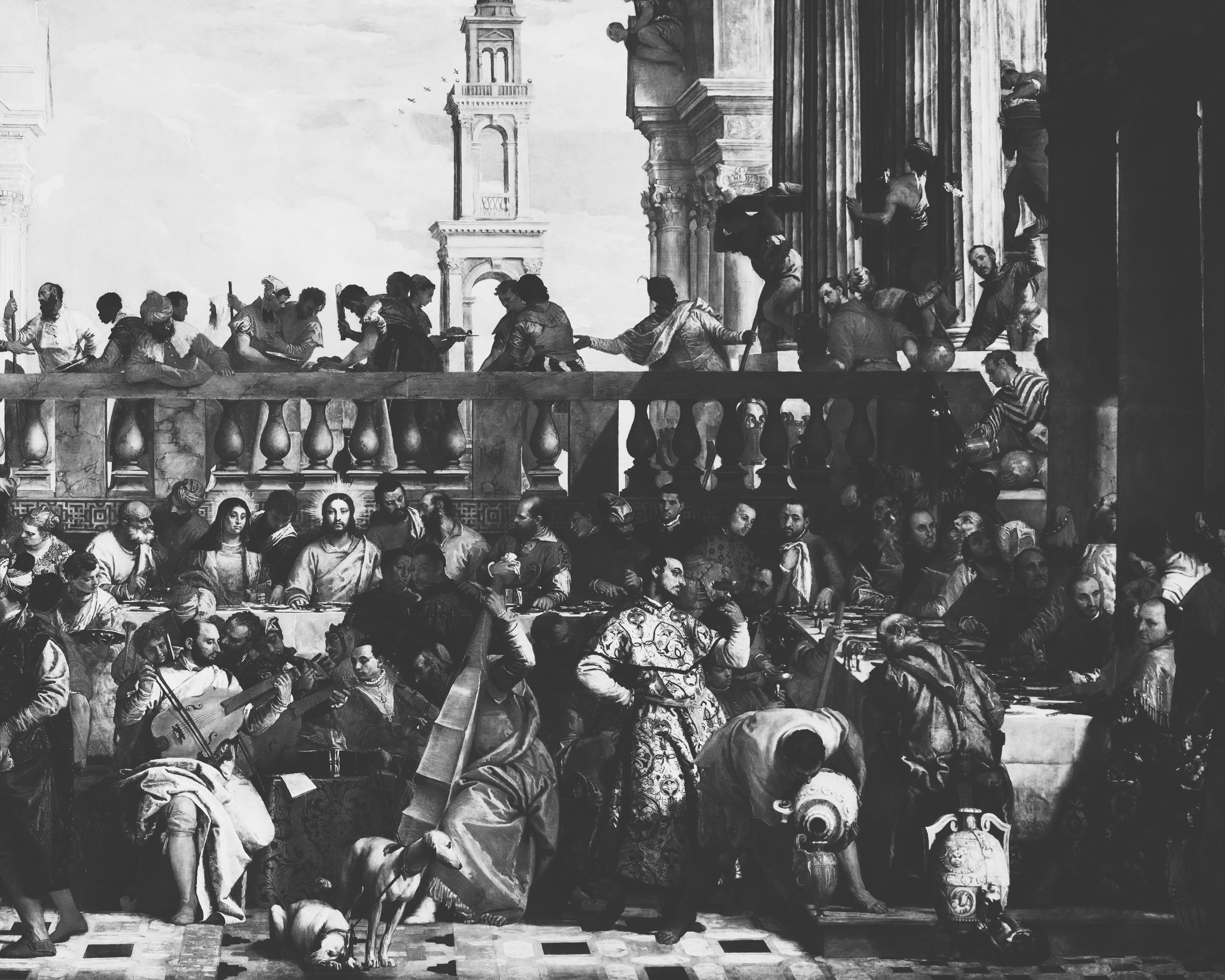
So when Mary says to Jesus, “They have no more wine,” she is not making an observation about beverage inventory. She’s naming a coming humiliation.
This family is about to be exposed.
They don’t have enough.
They can’t keep up.
They are about to be known by their lack.
Which is to say, shame is about to fill the void created by their shortcoming.
Which is to say, this family finds itself in a situation familiar to many of us.
We live in a reputation economy.
A screenshot can become a verdict.
A mistake can become an identity.
A moment of lack can become the story people tell about you for years.
So we manage.
We curate.
We make sure the feed looks full even when our actual lives feel empty.
This is where Jesus begins his public ministry.
Not in a temple.
Not on a stage.
At a small-town wedding where the wine has run out and the shame is about to make its grand entrance.
John is not just reporting history here; he’s presenting a theology.
A wedding is the union of two becoming one.
It’s the beginning of a new family. A new name. A new identity. A new life together.
Throughout Scripture, marriage is one of the most pervasive and powerful images for God’s relationship with his people. God is not a distant deity or cosmic idea. God is a faithful covenant partner who moves toward his beloved, seeking connection, desiring union.
So when John begins the story of Jesus’ ministry at a wedding, he is telling us that…Jesus has come to reunite what has been severed,
Jesus has come to restore what has been lost,
Jesus has come to form a new family,
Jesus has come to give us a new name,
Jesus has come to bring us into a new life together.
And he begins by protecting the dignity of exposed people.
This is not a party trick. It’s a sign.
Nearby were six stone water jars used for ceremonial washing. These jars were part of a religious world shaped by the belief that one could not be acceptable unless they were cleansed from contamination.
So Jesus says, “Fill the jars with water.”
And the water becomes wine.
Jesus does not ignore the human longing to made pure.
He fulfills it.
What the water of religious cleansing once pointed toward, the wine of Jesus’ blood would accomplish once and for all.
The miracle at Cana is not about abundance. It’s about transformation.
Not more water. New wine.
Not a better version of the same old life. A new creation life breaking in.
This is the difference between self-improvement and resurrection.
Self-improvement attempts to polish old jars.
Resurrection offers new wine.
Self-improvement asks, “How do I become a more impressive version of myself?”
Resurrection answers, “Here’s how to become a new person.”
This is good news for all those who’ve grown weary from trying to cleanse ourselves, prove and improve ourselves, justify ourselves, and protect ourselves from exposure.
Jesus does not stand at a distance, arms crossed, waiting for us to get our act together.
He comes to the wedding.
He steps into the shortage.
He repairs the shame.
He transforms what no one else can.
But there is a key line in the story that gets us there.
Mary says to the servants, “Do whatever he tells you.”
That’s the invitation.
Not to understand everything he tells you.
Not to agree with everything he tells you.
Not to wait until every fear is resolved and every possible outcome has been secured.
Do whatever he tells you.
We so often want the miracle without the surrender.
We want the wine without filling the jars.
We want transformation without trust.
But the servants do not discuss and debate the matter.
They do not ask for a strategic plan.
They do not demand certainty.
They simply do what Jesus told them to do.
They fill the jars.
The miracle begins with ordinary obedience.
And it is often our inability to embrace ordinary obedience that keeps us from experiencing the miracle.
We’re not short on information.
We’re short on surrender.
We know more than we obey.
We analyze more than we trust.
And the ache remains.
So maybe the question is not, “Do I believe Jesus can turn water into wine?”
Maybe the question is, “Am I willing to do whatever he tells me?”
Is there a relationship you’re trying to control, fix, or force?
Do whatever he tells you.
Is there a future you’re trying to secure by yourself, for yourself?
Do whatever he tells you.
Is there a wound you’re protecting because bitterness feels safer than grief?
Do whatever he tells you.
Is there a decision you keep delaying because you want certainty before obedience?
Do whatever he tells you.
Is there an invitation from God you keep resisting because you know it will cost you something?
Do whatever he tells you.
The master of the banquet tastes the wine and says, “You saved the best for now.”
That is the strange logic of God’s kingdom.
We often assume the best is behind us.
But Jesus has a way of saving the best for places we assumed were only endings.
The empty jar.
The exhausted leader.
The ashamed family.
The deadened hope.
This does not mean everything turns easy.
It means nothing is beyond transformation.
Imagine being there.
It would have been one thing to hear about the miracle later.
It would have been another thing to taste the wine that day.
This is the invitation.
Not merely to know the story but to taste the wine and experience the grace of Jesus in the actual places where you have run out.
The place of shame.
The place of scarcity.
The place of exhaustion.
The place where your strategies are no longer working.
The place where you cannot produce what is needed.
Jesus is not embarrassed by your lack.
He is not surprised by your limits.
He is not repulsed by the empty places in you.
He fills what we bring him.
And what he gives is better than what we ran out of.