
The Hand That Stays Raised
The Cost of Freedom and What You're Really Worth

In November of 2022, Christie’s auctioned off sixty works of art in a single night. The total sales on that single evening totaled $1.5 billion.
One painting—Les Poseuses, Ensemble by Georges Seurat—was sold for $149 million.
Paul Cézanne’s La Montagne Sainte-Victoire sold for $137 million.
Gustav Klimt’s Birch Forest sold for $104 million.
A van Gogh landscape sold for $117 million.
Which begs the question, “What compels people to spend hundreds of millions of dollars on a canvas covered in paint?”
Were those paintings worth it? How, exactly, do we determine the value of a thing?
In the modern world, what something is worth, it’s objective value, is largely determined and defined by whatever someone is willing to pay. The market decides.
Adam Smith, an eighteenth-century philosopher often called the father of modern economics, argued instead that the real value of a thing isn’t its price tag but the labor required to produce it. “[Labor] is alone the ultimate and real standard by which the value of all commodities can at all times and places be estimated and compared. It is their real price.” The human effort. The time. The sweat. The cost.
Taken a step further, we might say that the truest measure of worth and value isn’t just labor. It’s love.
A family cookbook handwritten over decades.
A nursery prepared after years of infertility.
A business rebuilt after bankruptcy.
A friendship sustained through betrayal.
The deeper the love, the greater the cost someone is willing to bear; and the greater the cost, the greater the worth and value.
Bought at a Price
The New Testament makes clear the worth and value bestowed upon people by God, revealed most emphatically on the cross. The apostle Paul describes it this way: “You are not your own; you were bought at a price” (1 Corinthians 6:19–20).
Paul is reaching for economic language to describe something deeply personal. And what exactly was this price paid for us? “Christ Jesus… gave himself as a ransom for all people” (1 Timothy 2:5-6).
In the original Greek, the word “ransom” is the word lutron, which always mean payment, typically paid for a few reasons:
Payment to set a slave or captive free
Payment to pardon someone from execution
Payment to absolve a debtor of an impossible obligation
Ransom is a reminder that freedom is costly. In Psalm 49, the psalmist writes, “Why should I fear when evil days come, when wicked deceivers surround me—those who trust in their wealth and boast of their great riches? No one can redeem the life of another or give to God a ransom for them—the ransom for a life is costly, no payment is ever enough” (Psalm 49:5-8).
Within the context of the psalm, the writer is making the point that great wealth cannot save us from death. The psalmist is saying, “No human being can pay that price and save themself.” Which leads to the question, “Who can?”
Jesus responds to this question: “The Son of Man did not come to be served, but to serve, and to give his life as a ransom for many” (Mark 10:45).
Jesus pays the price no person, regardless of their wealth, can pay. Money can settle debts but it cannot pay off death. Jesus can. And he has.
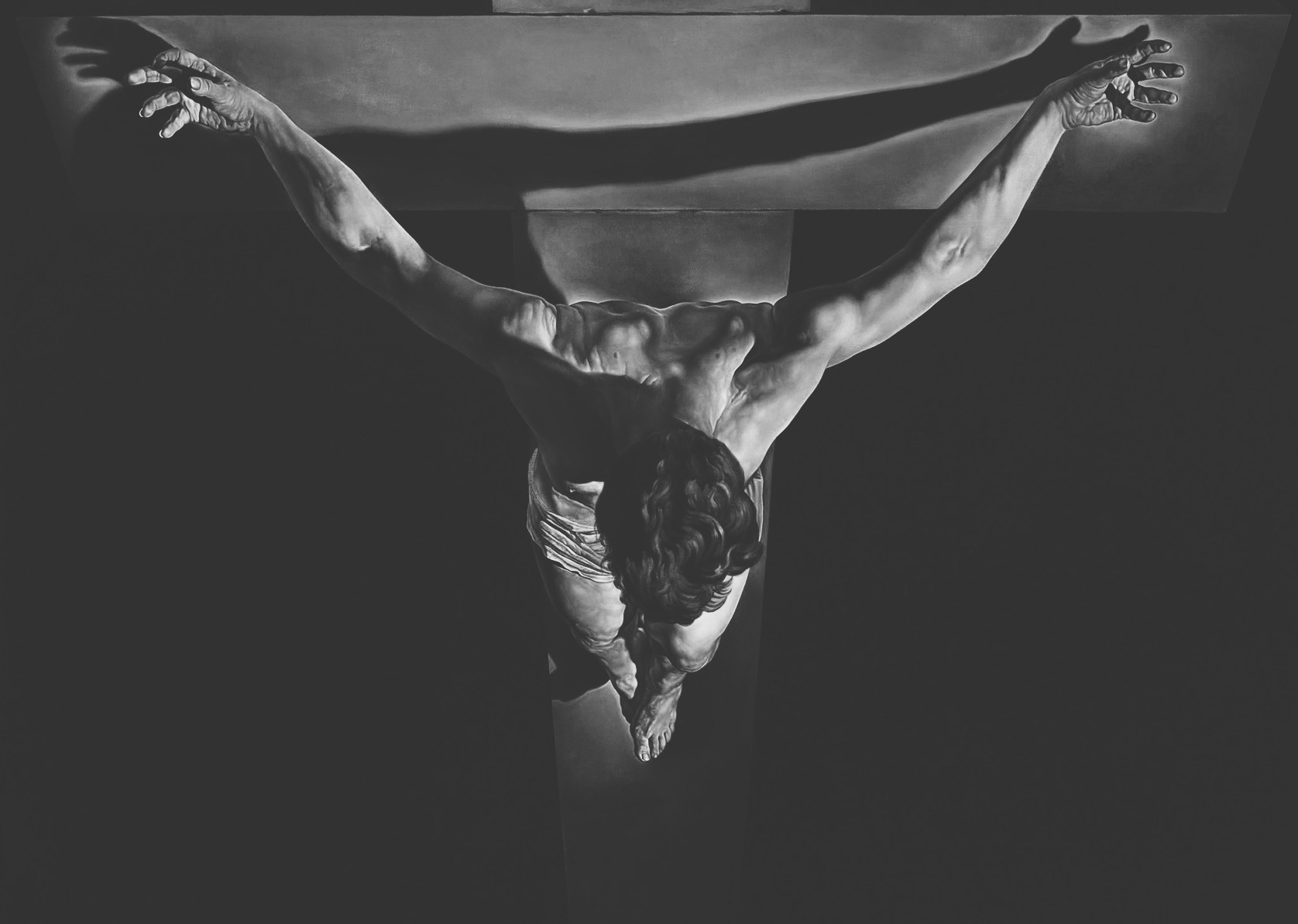
The theologian Fleming Rutledge reminds us that at the cross, we’re confronted and comforted by this incredible truth, that, “[God] has not stood back and pulled levers. He has stepped into the situation himself, personally. That is in large part what the trope ransom means in the biblical literature. The principal idea is that of cost to God.”
This is one of the great declarations of the cross.
God was not forced.
God did not negotiate with evil.
God stepped in and directly absorbed the cost of our bondage, to pay the price and set us free.
Freedom from shame.
Freedom from fear.
Freedom from sin.
Freedom from death.
The cross tells us two things at once, that sin is deadly and that, for whatever strange reason, we are unspeakably worth it to God—valued enough to cost the life of his Son.
The Hand that Stays Raised
Imagine your life as a work of art, up for auction.
Paddles raised. Bids climbing.
Everything in your life is bidding for you.
Your anxieties.
Your failures.
Your past mistakes.
Your insecurities.
Your achievements.
Your bank account.
Your social status.
The room fills with numbers. Value assigned and reassigned.
But one hand remains raised. A steady, unwavering, wounded and scarred hand.
Not because of your résumé.
Not because of your moral performance.
Not because of your upward mobility.
But because of love.
The cross declares that,
You are not disposable.
You are not an afterthought.
You are not too far gone.
You were worth the highest cost imaginable.
So if the ransom has been paid, why do we still live enslaved?
Enslaved to approval.
Enslaved to achievement.
Enslaved to resentment.
Enslaved to shame.
Enslaved to fear.
Your freedom has been bought. So walk out of the cell. You’re free to go. You’re free to follow. This is the invitation. To live not as commodities in a marketplace of comparison but as beloved sons and daughters. To believe, slowly and stubbornly, that the price paid for you defines your worth more than any market ever could.
You are a work of art beyond compare, not because you are flawless but because you are loved. And love, in the end, is the truest measure of value.
One question I had after the sermon yesterday was that ransom / payment is made TO someone. You mentioned Origen's idea that we were bought from Satan as being incorrect, but who *were* we ransomed from? Sin / death itself as a personified entity? If we were "bought," who owned us before Jesus bought us?