
Still On The Way
What Unfolds in the Gap Between Promise and Fulfillment

“Unless you people see signs and wonders, you will never believe.” - John 4:48
We may live in a disenchanted world. But we haven’t stopped looking for magic.
We have diagnoses and data, algorithms and AI, and scientific explanations for almost everything.
But explanations alone have not satisfied us.
As one writer recently suggested in a New York Times op-ed, there is “a widespread feeling that the material explanation is no longer sufficient; that something uncanny, maybe even numinous, is diffused into the texture of ordinary American life.”
Numbers seem to affirm this. A couple of years ago, Pew Research found that 81% of Americans believe that “there is something spiritual beyond the natural world,” and 67% believe that “miracles are still possible today.”
Maybe we’re not as disenchanted as we pretend to be.
Or maybe we are, but don’t want to be.
It seems many, maybe even most, hunger for something more.
But we shouldn’t conflate a desire for divine experience with a desire for God himself.
Even Christians, myself included, are prone to long for Jesus’ power without longing for Jesus himself.
Transcendence without surrender.
The miraculous without the Messiah.
Momentary spectacles without ongoing transformation.
“Unless you see signs and wonders, you will never believe,” Jesus says.
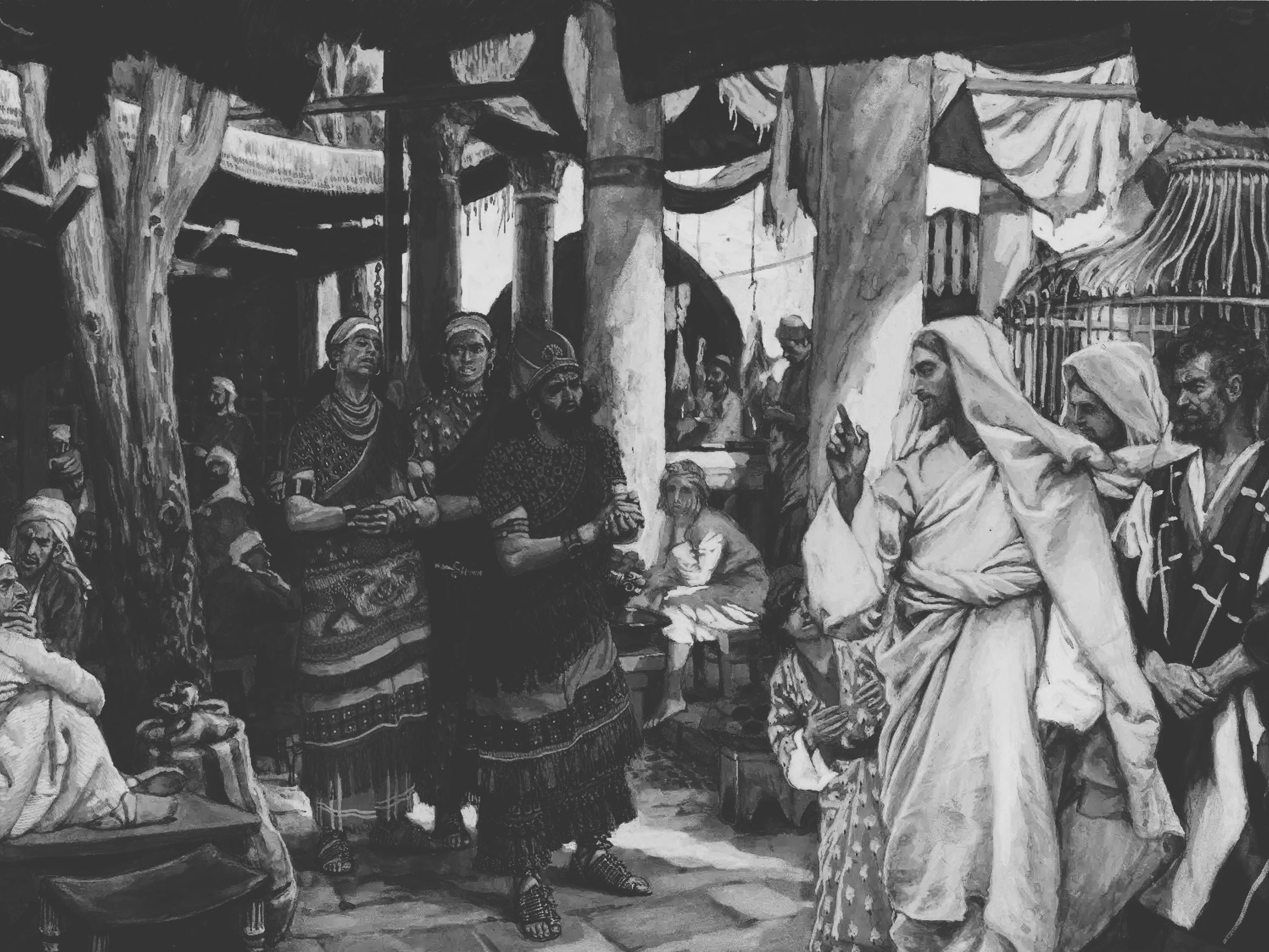
The context for Jesus’ words here are a bit confounding. A royal official has just approached him, seeking healing for his dying son. An honest and desperate plea. What this father desires is a good thing. It’s not selfish nor lavish.
A grieving father is simply asking for help. So why does Jesus respond this way?
The “you” is plural. Jesus is speaking beyond the father to an entire culture captivated by spectacle. The crowd was leaning in to see a David Blaine card trick on the city streets. They want to be astonished. They want the ooh’s and aah’s. They want a wonder worker who can interrupt their problems without disrupting their lives.
The biographer, John, is careful with his language.
He does not simply call what Jesus does a miracle. He calls it a sign.
A spectacle draws attention to itself.
A sign points beyond itself.
A miracle that ends with the miracle has missed the point.
The healing matters. The suffering matters. This dying child matters deeply to Jesus.
But the sign is pointing somewhere. To someone.
The man who comes to Jesus is a royal official, likely a high ranking individual in the court of Herod, who ruled Galilee under Roman authority.
There was a certain royal official whose son lay sick at Capernaum. When this man heard that Jesus had arrived in Galilee from Judea, he went to him and begged him to come and heal his son, who was close to death. - John 4:46-47
This man has wealth, power, and influence.
He has access to all of the right resources and right connections.
And yet, he begs.
Powerful people don’t usually beg.
At least not until they’re at the end of themselves.
Sometimes, life takes us to places where no amount of wealth, power, influence, resources, or connections can solve the problems at hand.
You can build the company and lose your marriage.
You can get the promotion and still find yourself unable to sleep at night.
You can fall in love, get married, have kids, only to discover that the inner ache remains.
You can fill your calendar and feel completely empty.
You can know all the right people and still feel entirely alone.
Desperation has a way of exposing the limits of the stuff we once trusted.
The diagnosis rewrites the future we’d imagined.
Infertility casts its unwanted shadow.
The child we love struggles in ways we cannot repair.
The career we built can no longer carry the weight of our identity.
Anxiety arrives unannounced.
Insecurity screams at us that we’re not enough.
Shame enslaves us and beats us down.
In these desperate seasons, we come to the end of ourselves.
But it is in our most desperate seasons that we are most ready to be deeply formed.
Self-sufficiency must collapse in order to make room for God to do what only he can do, not just for us, but also in us.
The father pleads with Jesus, “Sir, come down before my child dies.”
Jesus replies, “Go. Your son will live.”
Then comes one of the most quietly remarkable sentences in the story: “The man took Jesus at his word and departed.”
No visible evidence.
No confirmation from home.
Just the word of Jesus.
This royal official had traveled from his home in Capernaum, which was roughly twenty miles from Cana, across rugged terrain. Biblical historians estimate that the journey at the time would’ve taken about 8 hours, minimum; usually much longer.
The father must now begin the long journey home without knowing what he will find when he arrives.
And the miracle unfolds while he is still on the way.
This is where most of us live.
On the way.
Somewhere between the promise and its fulfillment.
Between the prayer and the answer.
Between the diagnosis and whatever comes next.
Between the longing and the realization.
It’s in this in between that faith begins to really grow.
Faith is cultivated most deeply in the gap of unknowing and trust.
This doesn’t mean every sickness will break if we believe hard enough.
This story isn’t a formula for forcing God’s hand.
Christian faith is not control or coercion by means of intense spirituality.
Supernatural blessings can’t be purchased with dollars or determination.
Miracles aren’t for sale.
We’ve not been given this father’s exact promise.
But we have been given Christ himself.
The promise isn’t instantaneous provision.
The promise is constant presence.
The promise is that his grace is sufficient.
The promise is that he draws near to the brokenhearted.
The promise is that we aren’t alone in our pain.
The promise is that nothing can separate us from his love.
The promise is that death does not have the final word.
Eventually, the servants meet the father on the road.
His son is alive.
The father receives what he had begged for. But he also receives something more.
He believes. And his whole household believes with him.
The miracle was never supposed to be a temporary solution to the problem at hand.
The miracle was a sign pointing to Jesus.
Maybe you are still on the way.
The prayer remains unanswered.
The child is still struggling.
The future is still uncertain.
The ache remains.
And keep walking.
The miracle may come in this life.
Or it may not.
But the Messiah has come.
The Messiah is coming again.
All will be well.