
Learning to Travel Light
On Faith, Surrender, and Trusting The Lord Will Provide

According to researcher Ryan Burge, “Gen-Z doesn’t trust anyone.” A cursory look at the data reveals it’s not just young adults—most adults have a hard time trusting these days.
We don’t trust institutions. We don’t trust the news. We don’t trust the internet.
We don’t trust that the video is real, the quote is accurate, that there isn’t a hidden agenda. We can’t totally be sure whether this is my pastor or AI.
Much of the mistrust is understandable. Expected, even.
Institutional failure has become commonplace.
The news has become more entertainment than information.
The internet is a hall of mirrors.
So we’ve learned to be suspicious, to question everything and everyone.
And when trust begins to disappear, something deeper starts happening inside us. We begin to believe we’re ultimately on our own. And if I’m on my own, then my future depends on me.
So we work harder and play harder.
We plan more carefully.
We hustle more aggressively.
We achieve and accumulate more furiously.
Not always because we’re greedy, but often because we’re afraid.
Are we really left to fend for ourselves?
Does anyone really see us? Will anyone actually help us?
The Lord Will Provide
These questions, at least in part, get to the heart of why the ancient name Yehovah Yi’reh matters so much.
Abraham called that place The Lord Will Provide. And to this day it is said, “On the mountain of the Lord it will be provided.”—Genesis 22:14 NIV
Yehovah Yi’reh. The Lord Will Provide.
We love this, don’t we? We love the thought of God being our divine provider. But this beautiful descriptor of God comes by way of a story that demands an uncomfortable depth of trust and surrender.
[God] said to him, “Abraham!” “Here I am,” he replied. Then God said, “Take your son, your only son, whom you love —Isaac—and go to the region of Moriah. Sacrifice him there as a burnt offering on a mountain I will show you.”—Genesis 22:1-2 NIV
God seems cruel and barbaric here, demanding child sacrifice.
It’s important to note that child sacrifice was not an uncommon religious practice in the ancient world. Archaeologists have found evidence of religious child sacrifice in the ancient city of Ur, which was Abraham’s birthplace, as well as in surrounding areas. But when we read the Hebrew Scriptures (e.g. Leviticus 18 and 22; Deuteronomy 12 and 18; the minor prophets), it becomes clear that God emphatically opposes the practice of child sacrifice. This is, in part, why the story tells us that “God tested Abraham.”
This is not a story about child sacrifice. This is a prophetic re-enactment—God is asking one man, Abraham, to put a truth on display through his lived experience.
This is a story about Abraham’s ongoing trust in God’s actual character.
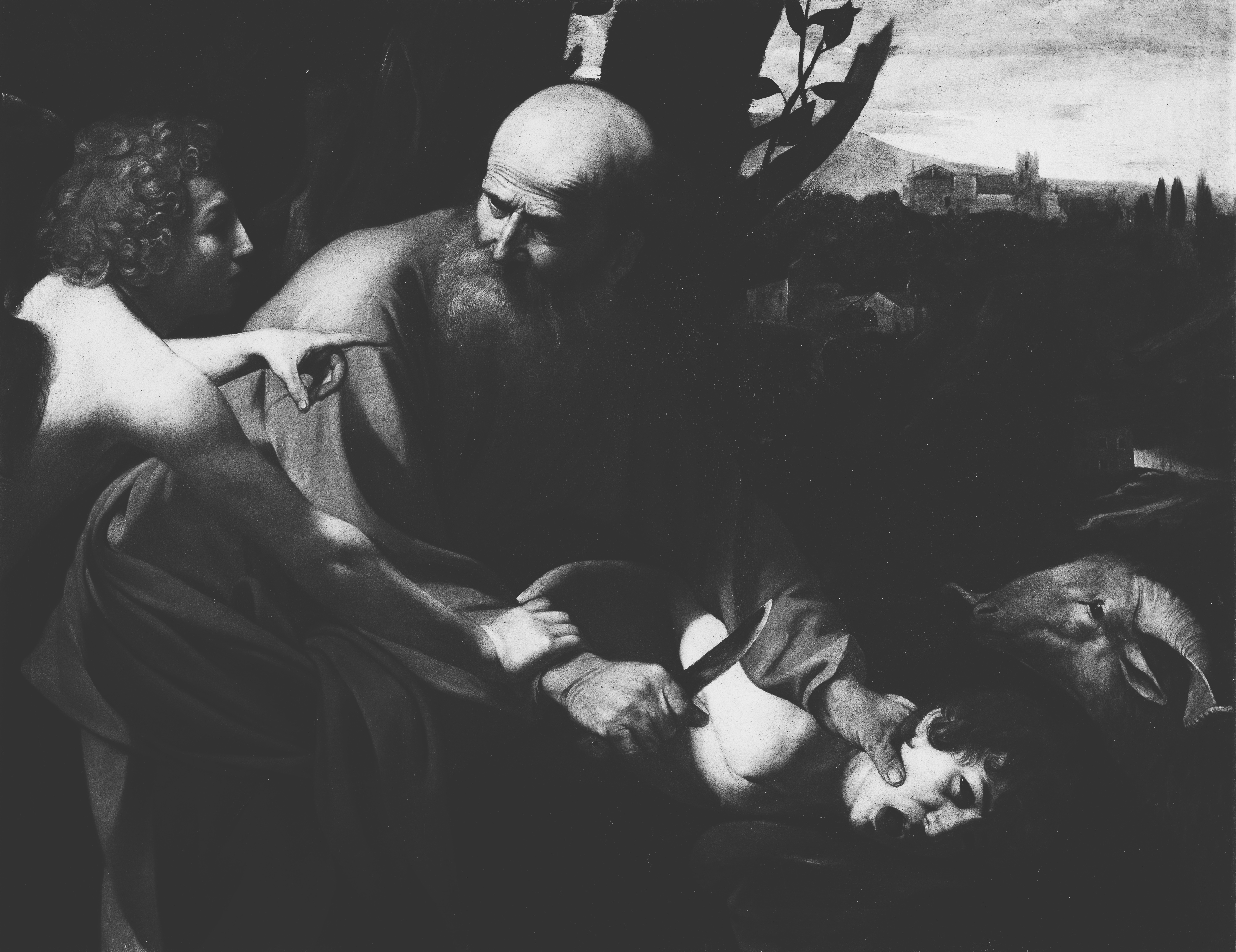
Can Abraham trust God’s character even when he can’t make sense of God’s request? That’s the question. And it’s not the first time Abraham has faced it. About forty years earlier, God had instructed him, “Go from your country, your people and your father’s household to the land I will show you” (Genesis 12:1).
Abraham’s journey with God began by leaving behind his homeland.
And now, his journey had brought him to laying down his son.
This has often been the shape of my own faith journey.
Sometimes faith has meant leaving something behind.
Sometimes faith has meant laying something down.
Over the years, I’ve learned sometimes faith means learning to travel light.
Faith is often about learning to travel lightly enough to follow God when he leads, as he leads, often in ways we didn’t expect.
Yehovah Yi’reh. The Lord Will Provide.
Sounds lovely. But in practice, we mostly want the provision, not so much the Lord.
We’d love to get what God can give.
We’re not so thrilled about surrender.
We’d love for God to sprinkle his divine magic on our well-laid plans.
We’re not so excited about walking the path of relentless trust.
But this is the paradox of Yehovah Yi’reh, The Lord Will Provide.
The path to God’s provision is an embrace of his Lordship.
He knows what I don’t.
He can do what I can’t.
So I trust and surrender.
I trust in his character even when I can’t make sense of anything else.
I surrender to his call even when I can’t see a way through.
To experience God’s provision, we must be willing to relinquish control.
In my own experience, God has most often provided as I’ve left behind my self-reliant, self-serving plans in trust and laid down my ambitions and attachments in surrender.
Isaac spoke up and said to his father Abraham, “Father?” “Yes, my son?” Abraham replied. “The fire and wood are here,” Isaac said, “but where is the lamb for the burnt offering?” Abraham answered, “God himself will provide the lamb for the burnt offering, my son.” And the two of them went on together.—Genesis 22:7-8
Isaac asks, “Where is the lamb?” Abraham replies, “God himself will provide.”
“Provide,” the Hebrew word yi’reh, comes from the root word ra’ah, which means “to see, to notice, or to care for.”
Abraham trusts and surrenders because he believes God sees, notices, and cares. When we trust and surrender, we are trusting in and surrendering to a God who sees us, notices our need, and is committed to caring for us.
Whatever anxiety or tension you might be feeling right now, may I remind you that God has proven himself to be our great provider, even at great cost to himself.
Two thousand years after God provides a ram for Abraham, God would go on to provide a sacrificial lamb for all of us.
God said, “Take your son, your only son, whom you love…” (Gen 22:2 )
A voice from heaven said, “This is my Son, whom I love…” (Matt 3:17 )
Abraham took the wood for the burnt offering and placed it on his son... (Gen 22:6)
Carrying his own cross, [Jesus] went out to the place of the Skull. (John 19:17)
Abraham answered, “God himself will provide the lamb…” (Gen 22:8)
John saw Jesus coming toward him and said, “Look, the Lamb of God who takes away the sin of the world!” (John 1:29)
Abraham walks up the hill to Mount Moriah, thinking he is going to lay down his son. Mount Moriah eventually becomes the hilltop where the Temple was at the time of Jesus. Tradition tells us Jesus climbs a similar hill, less than a mile away from Mount Moriah. The Son of God laid down so that we might live.
Mount Moriah was the question, “Will God provide?”
The cross at Calvary is the answer, “God has provided.”
God sees. God notices. God cares. And you can trust him.
You are not on your own.
Your future does not ultimately depend on you.
You don’t have to grip it all so tightly.
You don’t have to carry the weight of every possible outcome.
God has already provided the life of his Son.
Why would he stop providing now?
"To experience God’s provision, we must be willing to relinquish control." -- so true!
Of course, as you eloquently reminded us in yesterday's sermon, sometimes God's provision comes in a way we weren't expecting, like the manna from heaven, and we ask, "What is it?" I hope I'm not walking all over God's provision thinking it's just flakes of frost on the ground.